Tuesday, 21 July 2020

H&S consultant fined £1,400 for providing health and safety advice on technical and complex matters while not being qualified.

Self-employed consultant Clive Weal was fined £1,400 for  providing health and safety advice on technical and complex matters while not being qualified to advise his clients.
The circumstances were:
  • Mr Weal provided inadequate and flawed advice to small and medium sized enterprises on the management and control of risk in relation to hand arm vibration, work place noise and the control of substances hazardous to health.
  • Weal incorrectly identified risk from exposure to hand arm vibration as ‘low’.
  • As a result, he advised the use of ‘anti vibration gloves’ as an appropriate control measure. 
  • He also failed to identify that paints containing isocyanates can cause asthma. 
  • The poor and incompetent advice resulted in a lack of remedial action being implemented to prevent employees being exposed to levels of noise, hand arm vibration and chemical substances that may have a damaging impact on their health.

The HSE specialist inspector said:
“Employers are more likely to use external consultants to provide assistance in complex situations where a higher level of competence is required.
How consultants achieve competence is up to them, however they will have to be able to satisfy employers that they have a sufficient level of competence for the job in hand.
Being a member of a relevant professional body, which sets competence standards for its members and operates continuing professional development schemes is one way of helping; as is presenting evidence of relevant experience such as references from previous clients; or obtaining qualifications.
Where health and safety consultants are found to be in breach of legislation, HSE will hold persons to account for their failings.

Spartan Promenade Tiles Limited fined £10,000 after employee was caught in in-running nip

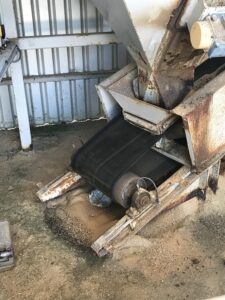
Cochester-based tile manufacturing company, Spartan Promenade Tiles Limited, was fined £10,000 + costs after a worker was drawn into the in-running nip.
The circumstances were:
  • The accident occurred on the tail drum of a conveyor.
  • On 18 February 2019, an employee was removing sand from the inside of a conveyor belt in an attempt to fix the machine. 
  • The company failed to suitably assess the risks, implement a safe system of work, and control the risks. 
  • Employees were not trained in the use of isolation or lock off procedures for the machinery on site.
  • Employees were not made aware that such procedures existed.
  • There were no arrangements for the supervision or monitoring of employees to ensure they were correctly isolating and locking off machinery before completing maintenance tasks. 
  • There was no functioning emergency stop in the vicinity of the conveyor tail drum. 
  • The guard on the conveyor tail drum had been removed.
  • The machine had not been isolated or even switched off.
  • The employee’s left glove became caught in the in-running nip of the conveyor tail drum, pulling his hand and arm into the machine. 
  • The emergency stop button in the building did not work, so a colleague had to run to another building to alert the operator at the control panel to turn the machine off.
  • The employee suffered three breaks to his left arm and crush injuries to his forearm.

The HSE inspector said
“This injury could have been easily prevented and the risks should have been identified. Employers need to properly assess and apply effective control measures to minimise the risk from dangerous parts of machinery, and adequately train their workers to use isolation and lock off procedures if they carry out maintenance work.”

Monday, 8 June 2020

IFG Drake Ltd fined £390,843 after employee was killed by an inadequately guarded machine

IFG Drake Ltd was fined £390,843 (inc.costs) after a worker suffered fatal crush injuries whilst working on a machine at the site in Huddersfield.
The circumstances were:
  • The accident occurred on a synthetic fibre manufacturing machine.
  • The machine was not adequately guarded. 
  • Problems occur with laps, which are when fibres stick to the rollers of the machine and begin to wrap around them.
  • It had become custom and practice for employees to reach around the inadequate guarding in place to deal with problems of this nature.
  • On 24 March 2017, Mr Javeed Ghaffar, was working on this machine. 
  • A lap had occurred on the stretch godet section of the machine.
  • Mr Ghaffar was removing this lap by reaching past the guard whilst the machine was running.
  • He became entangled in the machine.

The HSE inspector  commented:
“This was a tragic and wholly avoidable incident, caused by the failure of the company to provide adequate guarding against dangerous parts of the machine. 
Companies should be aware that HSE will not hesitate to take appropriate enforcement action against those that fall below the required standards”

Thursday, 28 May 2020

Modus Workspace fined £1.1 million + costs after worker fell from ladder

London-based relocation and refurbishment company Modus Workspace Limited, was fined £1.1 million plus costs of £68,116 after a worker was seriously injured when he fell from height.
The circumstances were:
  • Modus Workspace Limited were the principal contractor at a site in Hemel Hempstead. 
  • On 5 September 2016, an engineer was testing a sprinkler system for leaks. 
  • Modus failed to provide reasonably practicable measures to prevent a fall from the internal roof and was therfore not meeting their obligations as principal contractor.
  • This applied to both the engineer and other contractors working on the roof.
  • He climbed onto an internal roof and used an extension ladder to inspect the leak.
  • The ladder slipped away from him.
  • He fell almost three metres into the gap between the internal roof and the external wall. 
  • He suffered severe blood loss, amounting to around half of his bloodstream. He required a blood transfusion and needed 14 stiches to his head.  
  • He also sustained a fractured vertebrae and suffered soft tissue damage.

The HSE inspector said: “This case highlights the importance of taking reasonably practicable measures when planning and managing the risks regarding work at height within the construction industry. Falls from height remain one of the most common causes of work-related fatalities and injuries in this country and the risks and control measures associated with working at height are well known. The engineer’s injuries were life changing and he could have easily been killed. This serious incident and devastation could have been avoided if basic safety measures had been put in place.”

Phillips 66 fined £1,2 million after accident with high pressure, high temperature steam

Oil refinery company, Phillips 66 Ltd was fined £1.2 million + costs for safety breaches after two workers in North Lincolnshire suffered life-changing injuries from an uncontrolled release of high pressure and high temperature steam.
The circumstances were:

  • Phillips 66 Limited’s had a safe system of work which included isolating plant.
  • On  30 October 2013, two workers were  re-assembling high pressure steam pipework following maintenance of a steam turbine driven pump.
  • A number of personnel involved in the implementation of the company’s safe isolation procedure of the steam system failed to complete all the required checks and verifications.
  • During the re-assembly, the two workers were exposed to an uncontrolled release of high pressure, high temperature steam of around 250oC.
  • One worker, who was 53 years old, received burns to his lower back and legs.
  • The other, a 20-year-old apprentice, received extremely serious burns to his torso, chest, arms and legs. At the time of the incident, these injures were life threating.
  • The company was fined £1.2 million and ordered to pay £20,450 in costs
The HSE inspector said:
“Safe systems of work procedures are in place to ensure the health and safety of workers. Companies should ensure that all relevant employees and personnel who are involved in their operation and execution are suitably trained and competent to complete their roles within the system. 
Where a significant risk gap leads to an incident which results in injury to workers, HSE will take the appropriate enforcement action irrespective of the size of the organisation.”


Wednesday, 29 April 2020

E.G.L. Homecare fined £85,000 after worker's arm was caught in exposed rollers

E.G.L. Homecare Limited were fined £85,314 (inc.costs) after an agency worker was caught in a poorly-guarded machine.
The circumstances were:
  • The machine was a press which was part of a line that glued sponge to abrasive sheets to make scourer sponges.
  • There was no tunnel guard to prevent access to the rollers of the machine.
  • On 19 June 2019 a worker was operating the machine where he had to remove the sheets of scourer sponges from the conveyor onto a pallet.
  • He attempted to remove dirt from a press roller.
  • His right hand got dragged into the nip point of two in-running rollers up to his shoulder. 
  • He was diagnosed with forearm compartment syndrome, a painful condition caused by bleeding or swelling within an enclosed bundle of muscles. 
  • He had an operation on his arm and had to stay in hospital for six days.

The HSE inspector said:
“This incident could have been avoided had the company properly assessed the guarding arrangements on the machine when it was installed. Unfortunately access to in-running rollers is a common cause of injury but it can be easily avoided by providing effective control measures such as the provision of tunnel guards.”

What will happen to CE marking because of Brexit?


The CE mark was introduced to facilitate trade between EU countries.  
It is likely that after the end of 2020, this mark will be replaced by the UKCA mark for equipment made and staying in the UK.
Of course, the primary function of the CE mark within the UK is no longer relevant, but the secondary function of signifying that the equipment meets certain requirements will be met by the new mark.

Note that:
The UKCA mark has still to be ratified by Parliament
The UKCA mark must not be used until at least 1st January 2021.

The situation after 2020 is likely to be:
  • Equipment made within the UK and remaining within the UK will have the UKCA mark.
  • Equipment made within the UK and shipped to the EU will have the CE mark.
  • Equipment made within the EU and imported into the UK will have the CE mark.

There is, as yet, no definition of requirements for equipment made outside the UK and EU and imported into the UK.  However, it is logical that the UKCA mark and the actions behind it will be required.

The dates are correct at the time of writing this, but the delays caused by the Covid19 pandemic may change these.