Tuesday, 15 December 2020

Melba Products fined £130,000 after employee's finger was severed in unguarded blender

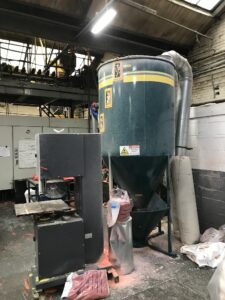
Plastics manufacturer, Melba Products Limited, was fined £130,387 (inc. costs) after an employee’s finger was severed due to inadequately guarded machinery.

The circumstances were:

  • The accident occurred on the hopper/blender of a blow moulding machine.
  • Melba Products Limited failed to carry out a risk assessment of the blender. 
  • They had failed to put in place appropriate control measures to prevent access to dangerous parts 
  • They had also failed to implement a suitable system of training and supervising of new starters.
  • The injured employee had only been operating the machine for one week prior to the incident.
  • The blender had not been sufficiently guarded to prevent access to dangerous parts of machinery. There was a large gap of approximately 4 x 5 inches towards the top of the hopper guard.
  • On 5 November 2018, the 36-year-old employee of Melba Products Limited had been refilling the hopper of a blow moulding machine with plastic granules from bags.
  • Work gloves that had been inside one of the bags fell into the hopper and through the guard. 
  • Whilst reaching through a large gap in the top of the hopper guard to retrieve the gloves, his middle finger contacted dangerous parts of the blender.
  • This resulted in it being severed down to the knuckle of his second finger.
The HSE inspector said:
“This injury was entirely preventable and could have been avoided by ensuring the machine was being operated safely, with a suitable guard in place. Adequate supervision should also have been in place to ensure the machine was being used safely by newer operatives. 
Employers should make sure they properly assess and apply effective control measures to minimise the risk from dangerous parts of machinery.”

VSMPO Tirus fined £200,000 for failure to provide support for material being cut which allowed 1.5 tonnes of material to fall onto an employee's leg.

Titanium supplier VSMPO Tirus Limited was fined £207,293 (inc.costs) after an employee sustained multiple fractures to his leg because of a failure to support material being cut.

The circumstances were:

  • On 20 September 2017, an employee was cutting titanium on a metal cutting band saw.
  • The sheets being cut were significantly larger than the machine bed.
  • VSMPO Tirus had failed to suitably and sufficiently assess the risk of material falling from the machine bed.
  • They had failed to put in measures to control the risk.  An extension to the machine bed or stanchions with back stops would have prevented the material from falling from the machine bed.
  • Almost 1.5 tonnes of titanium plate fell from the bed the band saw trapping the employee's leg underneath.

The HSE inspector added:
“A simple, cost-effective solution could have prevented this horrendous injury.”

Failure to isolate machines caused arm injury and £200,000 fine

Chemical company, Reckitt Benckiser Healthcare (UK) Ltd (Reckitt Benckiser Ltd), was fined £208,261 (inc.costs) after a worker had his left arm crushed in a bottle filling machine.

The circumstances were:

  • On 9 September 2017, the worker was carrying out a recalibration task.
  • The machine had not been isolated.
  • The machine caused a crush injury to his left forearm.
  • He also sustained tendon damage to the forearm, wrist and hand.

The HSE Inspector said: 
“Non-routine maintenance tasks must be carried out by trained personnel working to standard safe operating procedures."


Wednesday, 21 October 2020

Employee trapped inside equipment because of a lack of isolation

Manufacturer of carbon-based products, SGL Carbon Fibres Limited (SGL), was fined £12,000 following an incident where an employee sustained soft tissue injuries to his right hip and a fracture to his lower right leg.

The circumstances were:

  • The accident occurred during maintenance on a Regenerative Thermal Oxidiser (RTO).
  • There was a general permit to work.
  • However, no risk assessment was undertaken to identify any specific risks beyond the general ones mentioned on the Permit to Work documentation.
  • Also, pre-existing relevant procedures were not implemented.
  • As a result, the task was not clearly supervised, informed by a suitable and sufficient risk assessment and consequent work instructions, with appropriate supervision and monitoring to ensure the identified safe system of work was implemented.
  • On 25 April 2016, and employee was inside the RTO when he become trapped between a moving poppet valve and the valve seat.

Hose manufacturer fined after inexperienced employee was caught in unguarded machinery

Wirral-based Novaflex Ltd., that manufactures composite hose products was fined £29,000 (inc.costs) after an inexperienced agency worker was injured when he was pulled into a spinning lathe, sustaining open fractures to his right arm.


The circumstances were:

  • The accident occurred between a pitch wheel and mandrel on a lathe.
  • The lathe had been modified which made operators work closer to the entrapment hazard.
  • The company had not identified the risk of entrapment or the necessary controls required to avoid it.
  • As a result, Novaflex had failed to effectively prevent access to dangerous parts of the machinery.
  • They also failed to provide a safe system of work for the task 
  • They had not provided adequate instruction and training to ensure its workers were competent to operate the machinery.
  • On 20 November 2018, a worker at Novaflex Ltd was operating the lathe when the sleeve of his sweatshirt caught between a pitch wheel and rotating mandrel, pulling his arm into the machine. 
  • This resulted in an open fracture of the ulna (long bone found in the forearm) and the radial shaft of his right arm, leaving it permanently weak, making day-to-day tasks difficult and stressful. He also suffered severe bruising to his body and skin abrasions.

The HSE inspector said:
“Those in control of a workplace have a responsibility to identify and devise safe methods of working and to provide the necessary information, instruction and training to their workers.”

Woodworking company fined £59,000 after worker became entnagled in unguarded driveshaft

Woodworking company, Peter Ramsey & Sons (Denholme) Timber Ltd, was fined £59,484 (inc. costs) after a worker became entangled in an unguarded drive shaft and suffered serious injuries.

The circumstances were:

  • The accident occurred on a wood planer.
  • A new conveyor line had been installed and the planer then had an unguarded rotating driveshaft.
  • No risk assessments had been carried out which, if done correctly, would have identified the risk posed by this.
  • On 8 March 2018, a worker reached over the driveshaft to reach some wood.
  • His hi-vis jacket and t-shirt became entangled, drawing him into the machine. 
  • He sustained a torn tendon in his left fourth finger, a broken left wrist, a break to his little finger and nerve damage to his left arm.

The HSE inspector commented:
“The company should have produced a detailed risk assessment when the conveyor was added to the existing machine. This could have identified that there was an unguarded rotating drive shaft which required guarding to prevent access. This injury could have been easily prevented, and the risk should have been identified.”

UKCA and CE marking rules change again.


Like with most of the Brexit situation, the UKCA mark is a confusing mess.  Originally, the UKCA mark was supposed to replace the CE mark for equipment which originated in the UK and stayed here, with this coming into force at the end of 2020.  

Then it changed so with the UK Government making provision for the UKCA mark, but having it being complimentary to the CE mark and not replacing it.   The default would be the CE mark, but the UKCA mark is there in case there are circumstances where the CE mark cannot be used.  An example of this would be if a company had made use of a UK Approved Body.

Now it has changed back again.

The default mark from 1st January 2021 is now the UKCA mark, but you are still allowed to use the CE mark until 1st January 2022.

This applies to all equipment placed on the UK market, with the exception of Northern Ireland who will still use the CE mark.