Friday, 26 July 2019

Hanson Quarry Products Europe fined £411,000 after employee loses 4 fingers during a lifting operation

Hanson Quarry Products Europe were fined £411,000 (inc.costs) after an employee lost four fingers due to poor lifting operations when a large metal gate slipped off the tines of a forklift truck.
The circumstances were:
  • The accident happened at their Kings Cross site in London on 27 September 2016.
  • A large metal gate was being lifted using a forklift truck.
  • The company had failed to plan and supervise the lifting operation.
  • The gate was attached to the forklift with a chain on an “O-ring” that was slotted on to the tines with nothing to prevent it sliding off.
  • The gate fell as it was being lifted, slicing the worker’s hand as it fell to the floor.  

The HSE inspector said:
“The use of forklift truck, chain and O-ring was unsafe, putting workers at unnecessary risk. This incident could so easily have been avoided by simply having a competent person plan a safe lifting operation and providing adequate supervision to ensure the lifting operation was carried out safely.”

Wednesday, 24 July 2019

HSE require local exhaust ventilation on CNC machines

Because of health concerns with metalworking fluid mists, the Health and Safety Executive expect to see exhaust ventilation in place.

Although materials safety data sheets (MSDSs) may not state this, the HSE still require it. Similarly, the Machinery Directive or the Supply of Machinery (Safety) Regulations make no reference to such health considerations.  Therefore, there is no present obligation on machine tool suppliers to make provision for it, and it is no defence on the employer's part to claim that the supplier should have done it.

It is likely that the absence of LEV will result in an Improvement Notice being issued.

The HSE expect to see either local units, such as those from Filtermist, or ducted extraction to outside the building.

Where machines have open tops, then the HSE expect to see these closed to minimise fugitive emissions.

These requirements are for CNC machines where high rotation speeds cause misting.


Friday, 14 June 2019

MJB Excavations and Plant Hire fined £34,300 after worker was caught in an unguarded machine

Aggregate company MJB Excavations and Plant Hire Ltd was fined £34,300 (inc.costs)after a worker suffered crush injuries to his arm.
The circumstances were:
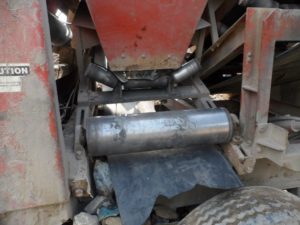
  • The accident occurred on an EXTEC 5000 turbo screen 3-way split machine used to crush and grade recycled aggregate stone.
  • There was a lack of guarding on the machine.
  • On 18 March 2015, Josh Mathieson was operating the machine when his arm became trapped between the moving belt and the roller. 
  • Mr Mathieson had to be cut free from the machine, and sustained a punctured lung, three broken ribs, a fracture to the top half of his right arm and nerve damage.

The HSE inspector commented:
“This injury was easily preventable, and the risk from the unguarded machine should have been identified. Employers should make sure they properly assess and apply effective control measures to minimise the risk from dangerous parts of machinery.”

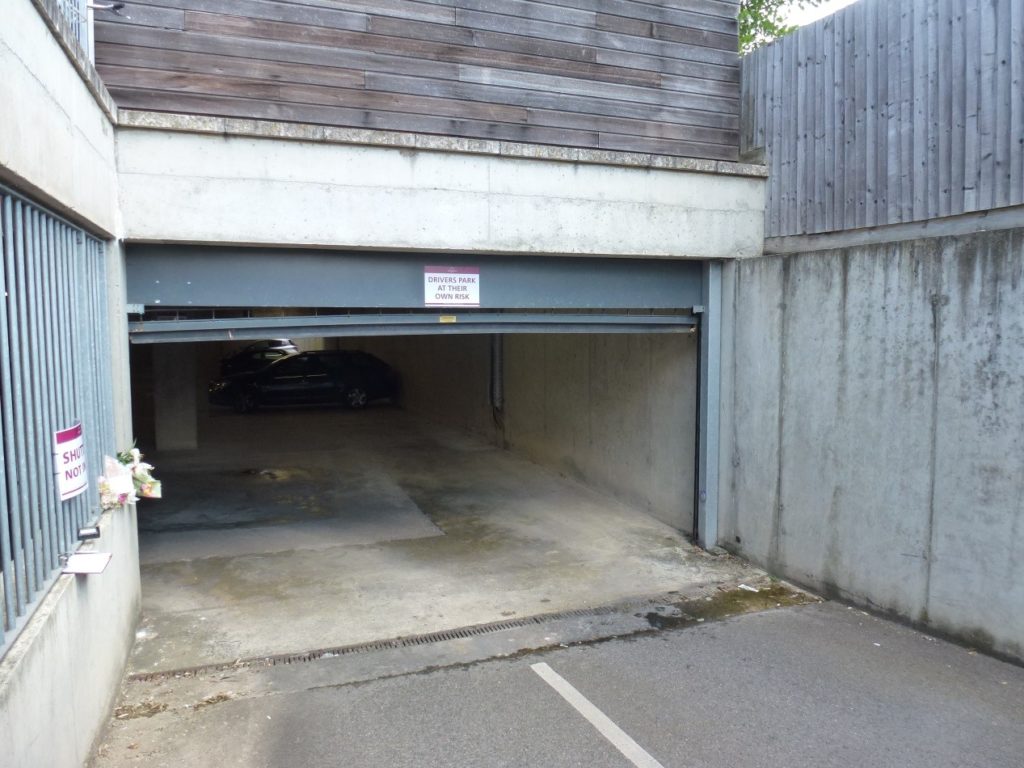
Electrical company fined after woman was fatally crushed by a roller shutter door.

B.S. Graves (Electrical) Limited was fined £31,500 (inc.costs) after a woman was fatally crushed by a roller shutter door.
The circumstances were.
  • The sensors at the top of the door were incorrectly wired and no longer functioned as the door opened.
  • B.S. Graves had carried out work on the roller shutter door since 2012, including an inspection only a month before the incident. 
  • The company did not check the operation of the safety sensors and failed to identify the fault
  • On 14 August 2016 Heidi Chalkley pressed the button to open the roller-shutter door.
  • She then held onto the grille as it raised and became trapped as it wound around the roller, fatally crushing her body.

The HSE inspector commented:
“This tragic and distressing incident has had an untold impact on all those who knew Heidi. It could have been avoided if the company had ensured employees were suitably trained to inspect the doors and the functioning of the safety sensors.”

National Grid fined £330,000 for death during a lifting operation.

National Grid Electricity Transmission PLC was fined £331.673 (inc.costs) after a worker was killed during a lifting operation.
The circumstances were:
  • A delivery crate containing a compressor needed to be moved.
  • There was inadequate planning and supervision of the lift.
  • Paul Marsden, the deceased person, had not received adequate training on the new lorry loader crane.
  • In particular, he had not received training on the additional risks due to the remote control unit.
  • On 18 November 2016 Mr Martin and a colleague were using a remote-controlled lorry loader crane
  • As they attempted to attach the slings to the hook, the crane struck Mr Marsden resulting in fatal injuries.
The HSE inspector said:
“This tragic incident could have been avoided if the company had properly planned the movement of the crate involved. Employers must recognise operating remote-controlled plants carry their own risks and should be managed appropriately, including through providing adequate training for employees.”

Standard policies

A lot of our clients get asked for their Corporate Social Responsibility Policy or their Equal Opportunities Policy.  Strategic Safety Systems have an ever-growing suite of such policies which we provide to out clients at no cost.  
These policies are structured around our typical client profile and provide a good starting point for adaption to suit your company.  
So don't write a policy from scratch; email info@strategicsafety.co.uk and we'll send you what you need.


Wednesday, 12 June 2019

Correct positioning of safety circuits

Whilst you can add interlock or emergency stop functions in many ways in a machine control system, you need to make sure the level of reliability is appropriate for the risks.

Think of reliability in the way that car braking systems have developed. When I first started driving, cars had a single master cylinder with the outlet split 4 ways to the wheels. Properly maintained, this was safe but it was lacking in reliability; a single leak would mean total loss of braking. These days, cars have dual circuits with cross-checking. Should a single leak occur, the brakes will continue to function, and the cross-check will illuminate a warning on the dashboard.

The level of reliability in machine control systems is determined using EN 13849. The following is taken from SSS White Paper 4http://www.strategicsafety.co.uk/pdf/WhitePapers/WhitePaper4-EN13849.pdf explaining this.

Interlock switches and "Pilz-type" safety relays are high integrity devices.

However, PLC controls and their programs do not have high integrity unless specifically intended for safety circuits.
Therefore, having a high integrity safety circuit solely as a feed into a PLC negates its reliability.  Typically, this may take a Cat.2 system and turn it into a Cat.B one.
By all means, use an output from your safety circuit as an input to the PLC so a message can be displayed, but use the output from the safety circuit to interrupt the power output side of the PLC.  SSS White Paper 7 shows some ways of how this may be done.

Although many companies do not design control systems, ensure that your purchase orders for machinery include a statement that the following must not be part of the design: