Tuesday, 29 July 2014

Jaw shattered by material being cut by bandsaw

Kingsnorth Waste Management, a Kent recycling firm, was fined £10,000 (inc.costs) after an employee had his jaw shattered when he was hit by a piece of plastic pipe ejected from a bandsaw.
The circumstances were:
  • A bandsaw was used to cut across cylindrical material.
  • Kingsnorth Waste Management had not identified the added risks of this operations, such as the rotation and ejection of pieces from the saw. 
  • There were no measures, such as the use of jigs clamps or wedges, to allow the machine to be more safely used.
  • On 11 August 2010, a worker was using a bandsaw to cut pipe 50 cm long, 30 cm in diameter and 2 cm thick.
  • As he fed the domed section of the pipe into the bandsaw, the teeth of the blade stuck into the plastic, rotated it round the domed end and ejected it. 
  • The piece was thrown out at high speed and struck him in his throat and under his chin. It broke both upper and lower jaw bones and burst his jaw hinges.
  • He had undergone a number of operations, including a bone graft from his hip, over the past four years to reconstruct his jaw. He still suffers from a continual feeling of ‘pins and needles’ caused by irreparable nerve damage, and has problems eating.
  • After the incident, there were two further instances of plastic pipe being ejected as it was being sawn and striking the operators. 
  • As a result, a prohibition notice was served on Kingsnorth Waste Management preventing any further use of the bandsaws for cutting this sort of material.

The HSE Inspector said:
“Kingsnorth Waste Management should have properly investigated how the bandsaws operated and fully understood the risks of use that were outlined in the instruction manual. That simple exercise would have demonstrated the need to put effective controls in place to safeguard their employees. The use of simple clamps or wedges, or the use of alternative cutting equipment, would have allowed the job to be safely carried out and avoided the life-changing injuries that this worker suffered. In addition, it would have not put others – including a teenager – in danger. Waste processing and recycling is a high-risk industry which has a disproportionately large share of fatal and serious injuries. Both individual companies and the industry collectively, must improve the way that health and safety, both of employees and the public, is managed.”

Arm crushed in unguarded roller

Littleport Mushroom Farm of  Ely was fined £14,700 (inc. costs) after a worker suffered crush injuries when his arm was caught in unguarded machinery.
The circumstances were:
  • Littleport purchased a specially-designed emptying machine.
  • They failed to identify that the machine’s roller was unguarded when they purchased it, and had therefore not provided guarding for the dangerous part of the machine.
  • On 25 January 2013 a worker was rolling a net and polythene sheet onto this machine.
  • The sheet dropped away. 
  • He attempted to tuck it back into the machine without stopping it but his left gloved hand became caught into the winding mechanism.
  • The machine continued to wind the net and sheet onto its roller, pulling the worker’s arm with it up to his shoulder. 
  • On hearing him shout, another employee ran to the machine and stopped it. He then used the reverse button to free the worker’s arm, which by then was crushed in several places.
  • The worker suffered a fracture to his left forearm and another to his upper arm, as well as bruising on the left hand side of his chest and back. He had to stay off work for over a year.
  • After the incident, the company fully enclosed the rotating part of the machine with fixed guarding fitted with a key exchange system.

The HSE Inspector said:
“The risks associated with unguarded winches or rollers are well-known in many industries, including agriculture. Incidents involving this type of machinery can cause serious, life-changing injuries, which is why onus is on employers to ensure that appropriate guards are in place to protect workers from dangerous moving parts. In this case, the worker needlessly suffered terrible injuries because, although the machine was CE marked, Littleport Mushroom Farm failed to comply with their duty to make sure that the machinery met the essential guarding requirements. There are several deaths and many more injuries each year due to incidents where workers have been using unguarded or poorly guarded machines, and most of these are easily prevented. Companies have a legal duty to ensure dangerous parts are effectively guarded before a machine is used, whether or not these are provided by the manufacturer.”

Aberdeen company fined after forklift truck runs over leg

Scotoil Services Ltd., of  Aberdeen firm was fined £5000 after a worker was injured when a forklift truck ran over his leg and foot.
The circumstances were:
  • There were operations at Scotoil where pedestrians and forklift trucks worked in the same area.
  • Scotoil failed to provide sufficient segregation between pedestrians and vehicles in this restricted zone.
  • It also failed to provide sufficient instructions to control vehicle movements in the area while pedestrians were working.
  • There was a similar incident a year earlier, in 2011, when a Scotoil employee was injured when he was struck by a forklift truck which was reversing within a building on the site. 
  • The HSE took enforcement action, requiring Scotoil to make improvements to the layout of the building so that pedestrians and vehicles could circulate safely within it.
  • On 17 August 2012, Derek Bonnar was one of four men working in two teams to pressure-wash components in two large wash bays.
  • Mr Bonnar was working alone cleaning down one of the bays when a colleague from the second team returned driving a forklift truck.
  • While the driver reversed the forklift and then moved forward to load components, Mr Bonnar was walking backwards while hosing down the next bay. 
  • The truck collided with Mr Bonnar, driving over his left leg and right foot.
  • Mr Bonnar suffered a broken leg and fractures to his foot.
  • He spent a week in hospital and a further seven weeks in a wheelchair. He has since returned to work.
  • Although Scotoil carried out its own investigation and made a number of recommendations, no changes were made to the system of work or the physical layout of the site.
  • When HSE visited six weeks after the incident, they issued a Prohibition Notice preventing the use of vehicles in the area until a safe system of work had been implemented so vehicles and pedestrians could work together safely.

The HSE Inspector said:
“Scotoil Services Ltd was aware of the need for vehicles to be working in this area at the same time as workers, but despite this it failed to put measures, such as walkways or marked transport routes, in place to prevent the risk of vehicles colliding with pedestrians. The company had taken action after the 2011 incident which went over and above that required by HSE’s improvement notice at the time. However, the risks in the controlled zone were not fully recognised and similar safety measures had not been installed. The dangers associated with vehicle movements around pedestrians are well-known. Every year there are over 5,000 incidents involving transport in the workplace. About 50 of these result in people being killed. This incident was entirely avoidable. Instead Mr Bonnar was left with a painful injury, and needed several months to recover.”

Wednesday, 23 July 2014

Ramsgate company fined £69,000 after employees develop Hand Arm Vibration Syndrome

Cummins Power Generation Ltd., of Ramsgate,  were fined £69,149 (inc. costs) on 22 July 2014 after one of its employees was diagnosed with Hand Arm Vibration Syndrome (HAVS), a debilitating condition that cannot be reversed.
The circumstances were:
  • Some employees used hand-held tools which had a high level of vibration.
  • Cummins Power Generation had failed to manage the exposure of their employees to the serious risks of vibration for more than ten years.
  • The company failed to assess their workers’ level of exposure to vibration until the HSE began its investigation. By this time some employees were either at or beyond the trigger levels for developing symptoms. 
  • The firm also failed to put preventative measures in place until HSE served an improvement notice.
  • As a result one employee in particular was diagnosed with advanced HAVS in both hands.  Although he still works with the company he has to ask for the help of a colleague whenever a task requires the use of a hand-held power tool. He is also unable to enjoy previous hobbies of golf or swimming.
  • A further four employees of Cummins Power Generation Ltd were also diagnosed with symptoms consistent with early stage (HAVS).

The HSE Inspector said:
“HSE guidance on HAVS was published as long ago as 1994 so vibration risk has been widely known for many years – ‘white-finger’ was a common industry term for HAVS.  Cummins Power Generation failed to manage this risk over a significant period of time, from early 1998 to early 2009, across its sites in both Ramsgate and Margate. Hand-arm vibration can have a significant impact on a worker’s health. If the use of power tools is not controlled correctly by engineering and manufacturing companies, workers can develop HAVS to a degree that will have a permanent disabling impact on their working and social lives. Measures can include purchasing tools with the lowest vibration levels, introducing better systems of work when possible to avoid exposure all together, making sure workers know how to use tools properly and regular health surveillance to detect any early signs.”

Tuesday, 22 July 2014

SPS Aerostructures fined £190,000 after 24 workers develop hand-arm vibration problems

SPS Aerostructures Ltd., a Nottinghamshire aerospace engineering company was fined £190,000 (inc.costs) on 21 July 2014 after 24 workers were diagnosed with hand-arm vibration symptoms.
The circumstances were:
  • In 2005, the company’s health and safety committee asked it to carry out a suitable risk assessment for exposure to vibration, and act on the result.
  • An assessment of the company’s tools took place in 2006 which identified that some, including drills, grinders and hammers, posed a high risk from exposure to vibration. 
  • However, they were not taken out of service and no controls were put on their use until 2010.
  • Some employees used their own tools, which were also not assessed and therefore no controls put in place.
  • Although SPS Aerostructures provided some health surveillance for employees, it was not sufficient to identify symptoms early and refer individuals to occupational health specialists for timely diagnosis and management.
  • The workers developed either Hand Arm Vibration syndrome (HAVS) or carpal tunnel syndrome from being exposed to high levels of vibration for several years.
  • Some of the employees at SPS Aerostructures Ltd had to undergo operations and some had to be removed from the work they were doing. 
  • One was given work without any vibration exposure but was later made redundant. He is a skilled metal sheet worker, and is now unable to work in this field.

The symptoms of HAVS syndrome include blanching and numbness in the fingers, especially in the cold, as well as pins and needles, which can be extremely painful. This is due to damage to the small blood vessels and nerves supplying the hands. Sufferers can have difficulty picking up small objects and performing tasks such as doing up buttons. As sufferers cannot be exposed to cold without pain it can restrict some work and hobbies such as fishing, cycling or gardening.
Sufferers of carpal tunnel syndrome also experience pain and pins and needles, especially at night, and a reduction in grip. An operation is normally needed to release the nerve, although this is less successful if they have been exposed to vibration.
The HSE Inspector said:
“SPS Aerostructures Ltd was, from 2005, regularly being made aware that employees were suffering from vibration-related symptoms. They were being supplied with this information directly from staff and from their Occupational Health Nurse. However, they chose to ignore this information and allowed employees to work unrestricted with high risk tools, or their own tools. The company was slow to implement improvements even after HSE’s involvement and had to be issued with an Improvement Notice in 2011 to ensure compliance. Adequate assessment of the risk from vibration, provision of tools with lower vibration levels, and a good system of work would have ensured workers were not over-exposed to vibration. A better health surveillance system would also have identified problems earlier, and symptoms could have been managed to prevent them getting worse.”

Is it necessary to retrain a new employee who is also a forklift truck driver?

A client recently asked if it was necessary to retrain a person who had a valid forklift truck training certificate when he joined the company before allowing him to drive a forklift truck.

The key points on which the employer must satisfy himself are:

  • Was the training on the category of forklift truck and the types of operations the driver would be exposed to at the new employer?
  • Was the training carried out by a competent trainer?

If the employer is satisfied with these, further training is not necessary.

It is worth referring to L117 Rider-operated lift trucks - Operator training and safe use

32 Employers should not allow anyone to operate, even on a very occasional basis, lift trucks within the scope of this ACOP who have not satisfactorily completed basic training and testing as described in this ACOP, except for those undergoing such training under adequate supervision. 

33 When arranging for training, employers should satisfy themselves that it is in accordance with this ACOP. Operator training should only be carried out by instructors who have themselves undergone appropriate training in instructional techniques and skills’ assessment.*

34 They should give instruction only on the types of lift truck and attachments for which they have been trained and successfully tested as operators. Instructors also need sufficient industrial experience to enable 
them to put their instruction in context and an adequate knowledge of the working environment in which the trainee will be expected to operate. 

67 After employees have successfully completed all three elements of training, 
you should give them written authorisation to operate the lift truck(s) they have been 
trained to use. You could issue authorisations on an individual basis and/or record 
them centrally. They should state the operator’s name, the date of authorisation, 
the types or categories of lift truck to which they relate and any special conditions, 
such as operational limitations. 

68 You should not allow anyone to operate lift trucks on any premises without 
authorisation (except a trainee under close supervision). You will also need to 
ensure authorised operators continue to be competent through regular monitoring 

and assessment (see paragraphs 75-76). 

L117 can be downloaded free from this link: http://www.hse.gov.uk/pubns/priced/l117.pdf

Monday, 21 July 2014

Developer jailed for 30 months after breaching prohibition notices

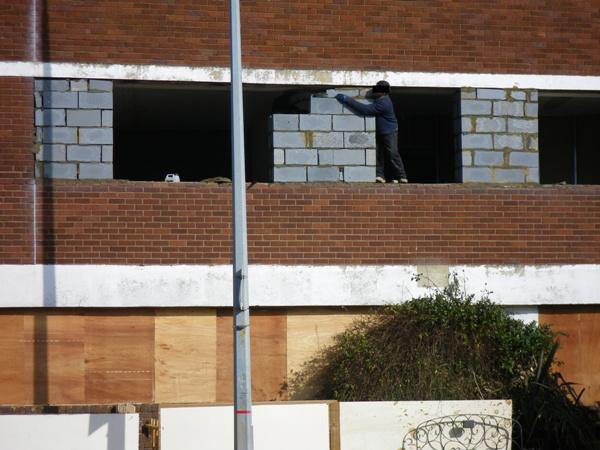
Developer Eze Kinsley has been sent to prison for 30 months after repeatedly breaching prohibition notices.
Kinsley was found guilty of assaulting an inspector from HSE at a separate court appearance.


The circumstances were:
  • The Health and Safety Executive (HSE) visited the site on 28 February 2013 following complaints from local residents worried about debris falling from upper storeys and of the danger to workers being left without any protection from falling while working at height.
  • They found that there were no safety measures in place to prevent injury to workers from debris falling from height.
  • There was also a real risk of injury to members of the public using the road and pavement next to the Parkeston House site.
  • Kinsley, who was in control of workers at the site, verbally abused the HSE Inspector who visited. 
  • The inspector had to return with Essex police officers later to serve prohibition notices requiring an immediate stop to unsafe work at the site.
  • Kinsley reacted strongly to this, physically assaulting the inspector.
  • After further reports that work had not stopped, HSE issued a further prohibition notice on 3 April 2013, which was breached within just one hour of being served.
The HSE Inspector said:
“Although no one was injured as a result of the woefully inadequate working practices this is nevertheless a serious case. The working conditions on this site were truly appalling with absolutely no provision for workers’ safety. In addition, the repeated breaching of prohibition notices – without any attempts to put right the reasons why work had been stopped – put workers and the general public at serious risk. Mr Kinsley refused to accept that he had a responsibility to make sure people who worked for him, and any member of the public living or working near his site, were not subjected to unnecessary risks – and vigorously and violently resisted all attempts to make him take actions to protect them. Putting safe working practices in place is often simple and inexpensive and, where this doesn’t happen, the costs, both financial and personal, can be immense.”